Emotional eating, measured
Ten articles built on 1.5 million meals logged in the I feel food app: what emotional eating looks like when you measure it meal by meal.
-
Part 1 of 10
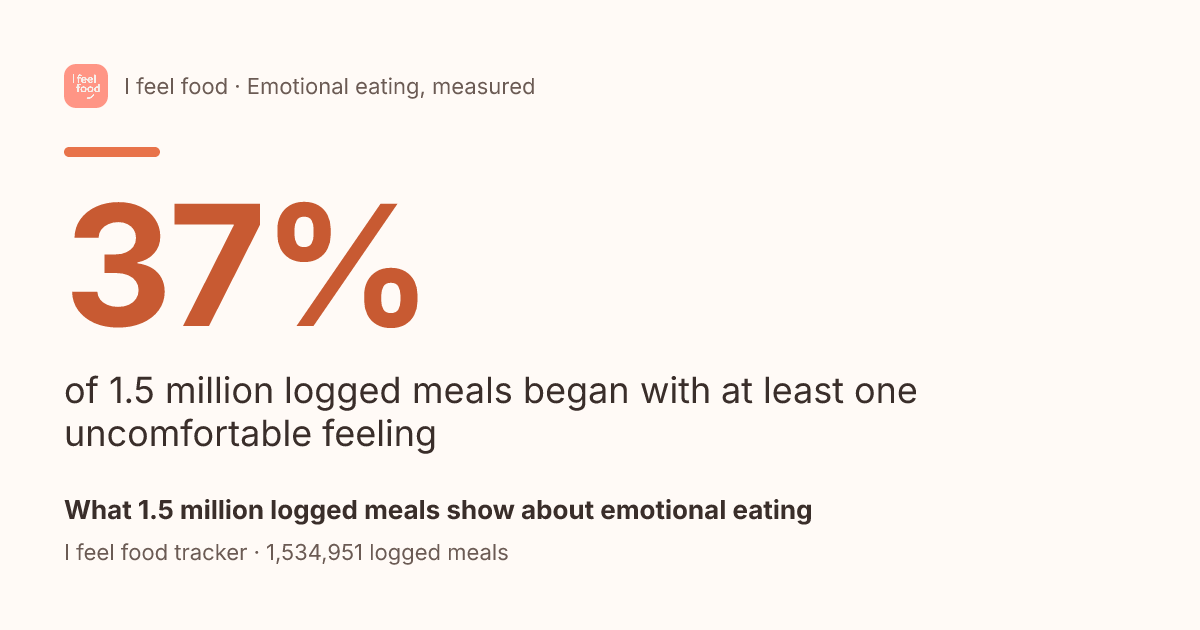
What 1.5 million logged meals show about emotional eating
37% of 1.5 million logged meals began with an uncomfortable feeling. What emotional eating looks like when you measure it meal by meal, not by survey.
-
Part 2 of 10
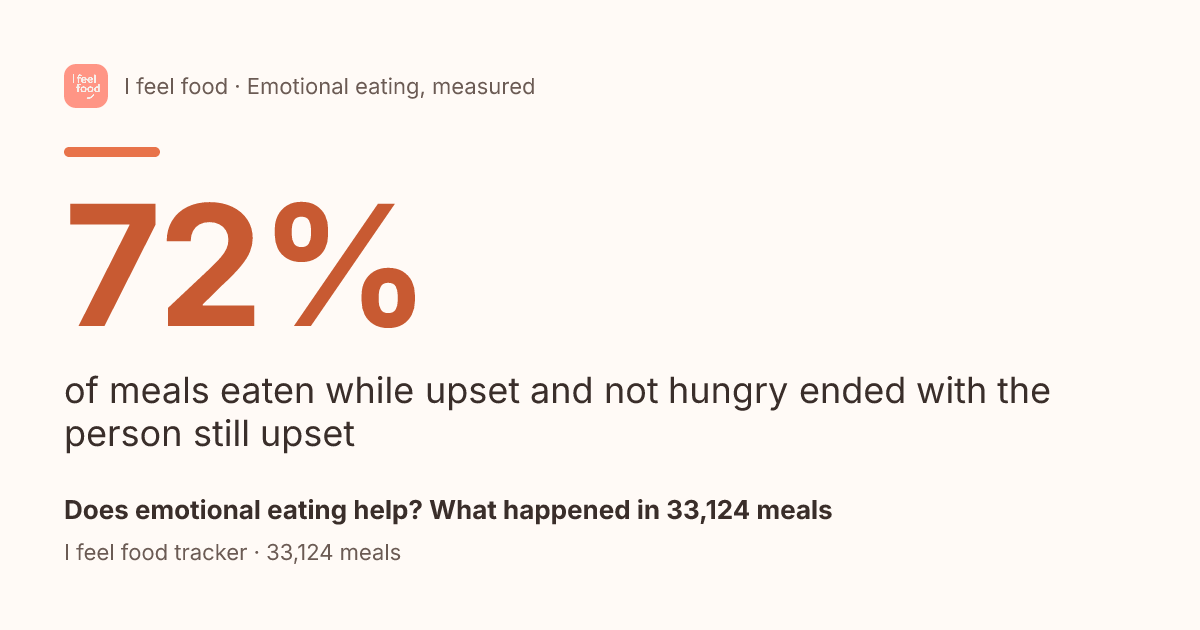
Does emotional eating help? What happened in 33,124 meals
We checked 33,124 meals eaten while upset and not hungry. 72% ended with the person still upset. Here's what happened, and a ten-second check to try instead.
-
Part 3 of 10
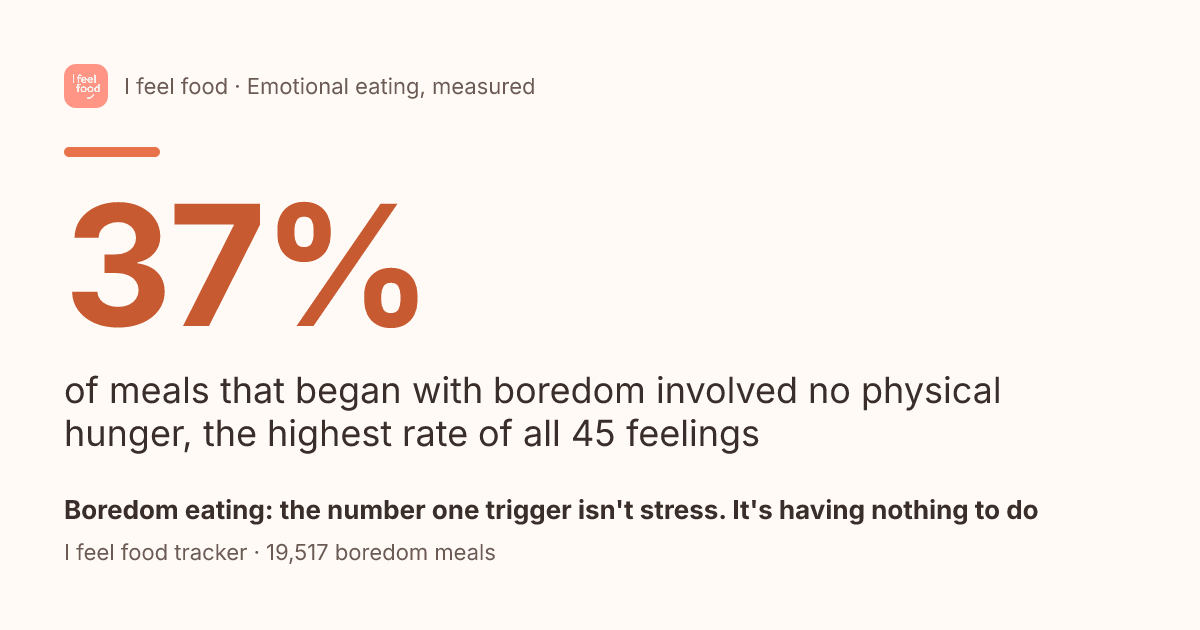
Boredom eating: the number one trigger isn't stress. It's having nothing to do
We ranked 45 feelings by how often they led to eating without hunger. Boredom eating won: 37% of boredom meals had no physical hunger. Why, and what to do.
-
Part 4 of 10
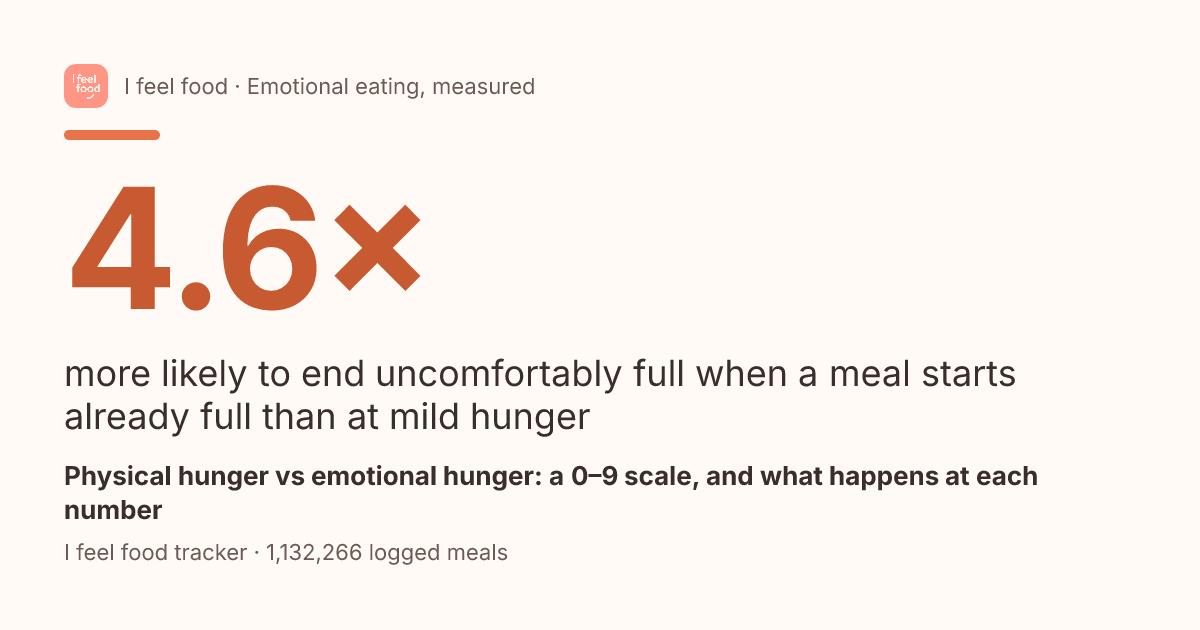
Physical hunger vs emotional hunger: a 0–9 scale, and what happens at each number
Physical vs emotional hunger on a 0–9 scale. In 1.1 million meals, eating when already full made overeating 4.6x more likely. The full scale, and how to use it.
-
Part 5 of 10
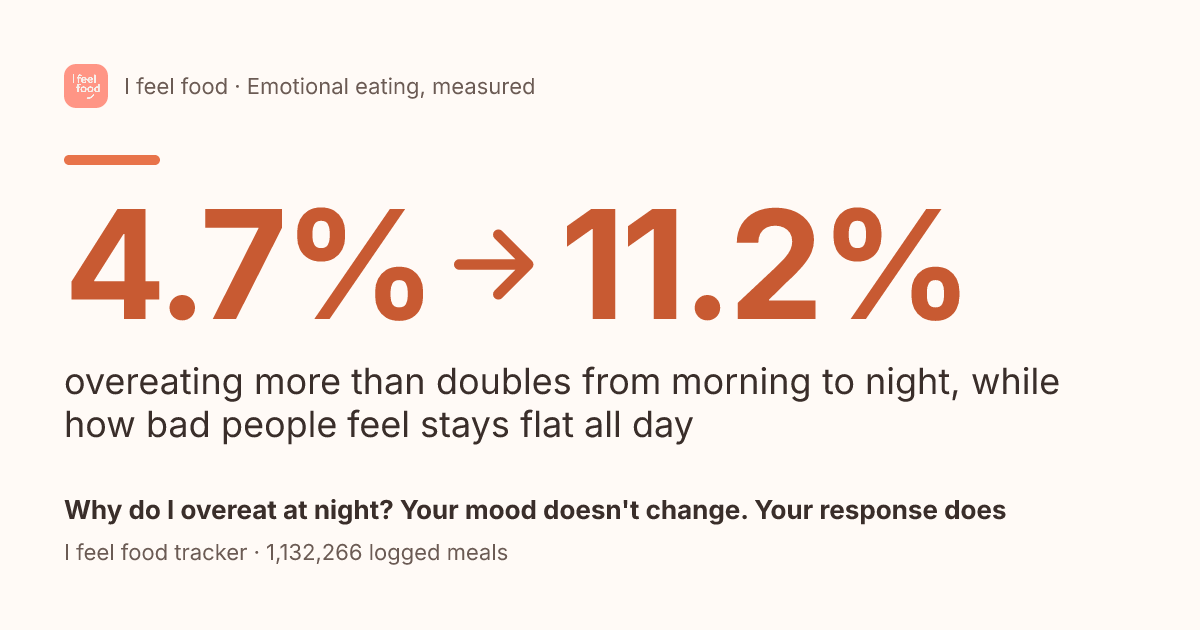
Why do I overeat at night? Your mood doesn't change. Your response does
Why do I overeat at night? Overeating more than doubles from morning to night, 4.7% to 11.2%, while mood stays flat. What changes at night, and what moves it.
-
Part 6 of 10
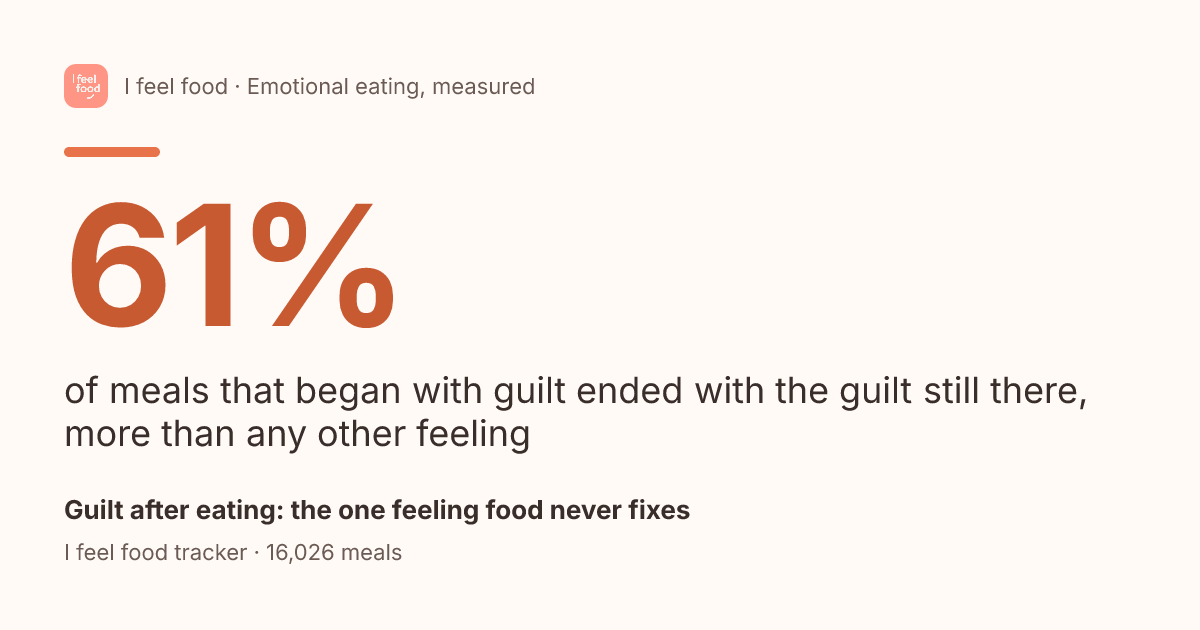
Guilt after eating: the one feeling food never fixes
Guilt after eating: meals that start in guilt end in guilt 61% of the time. The loop that creates, why being stricter feeds it, and where it actually breaks.
-
Part 7 of 10
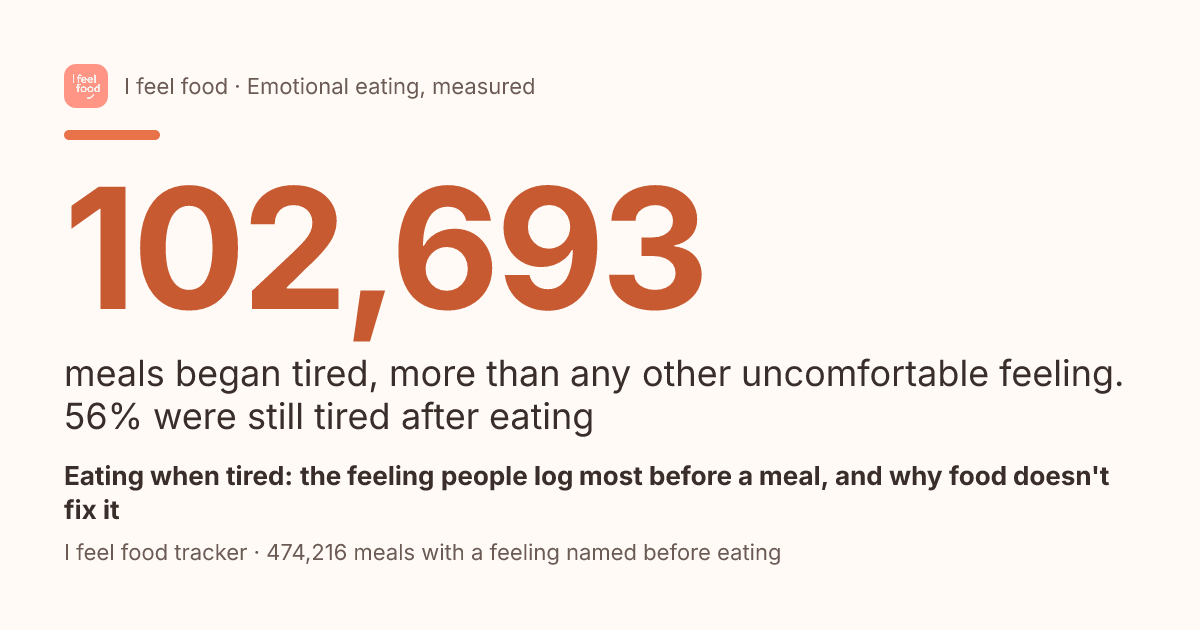
Eating when tired: the feeling people log most before a meal, and why food doesn't fix it
Eating when tired: tiredness is the most common uncomfortable feeling logged before meals, and 56% are still tired after. How to tell real hunger from a slump.
-
Part 8 of 10
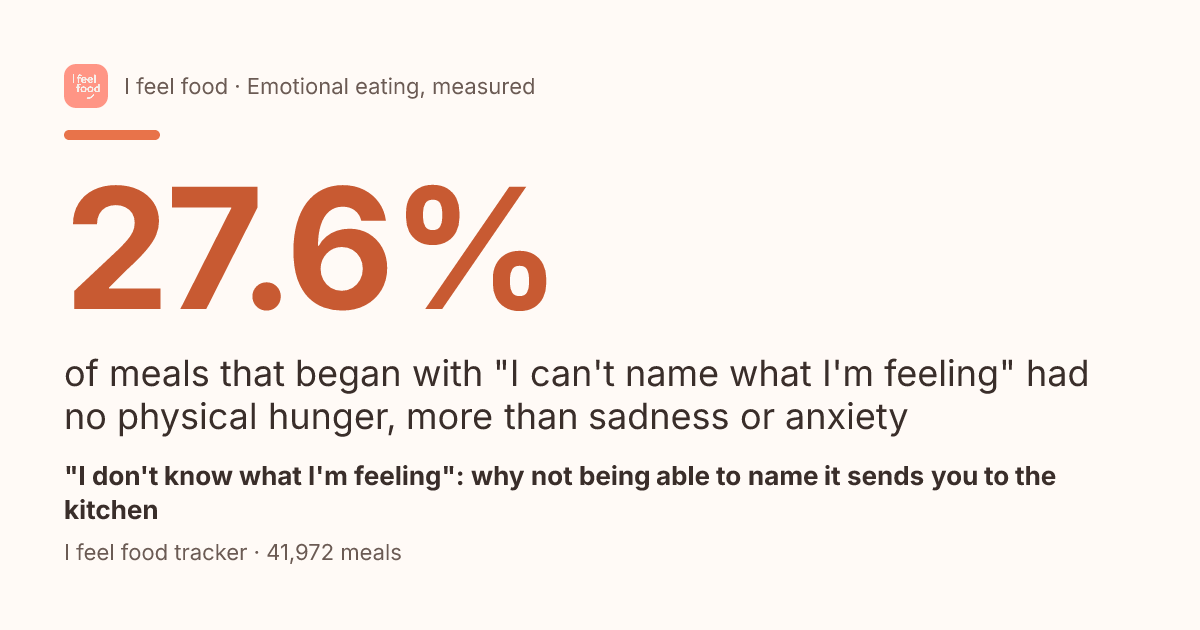
"I don't know what I'm feeling": why not being able to name it sends you to the kitchen
41,972 meals began with "I can't name what I'm feeling". 27.6% had no physical hunger, more than sadness or anxiety. Vagueness, not intensity, drives the reach.
-
Part 9 of 10
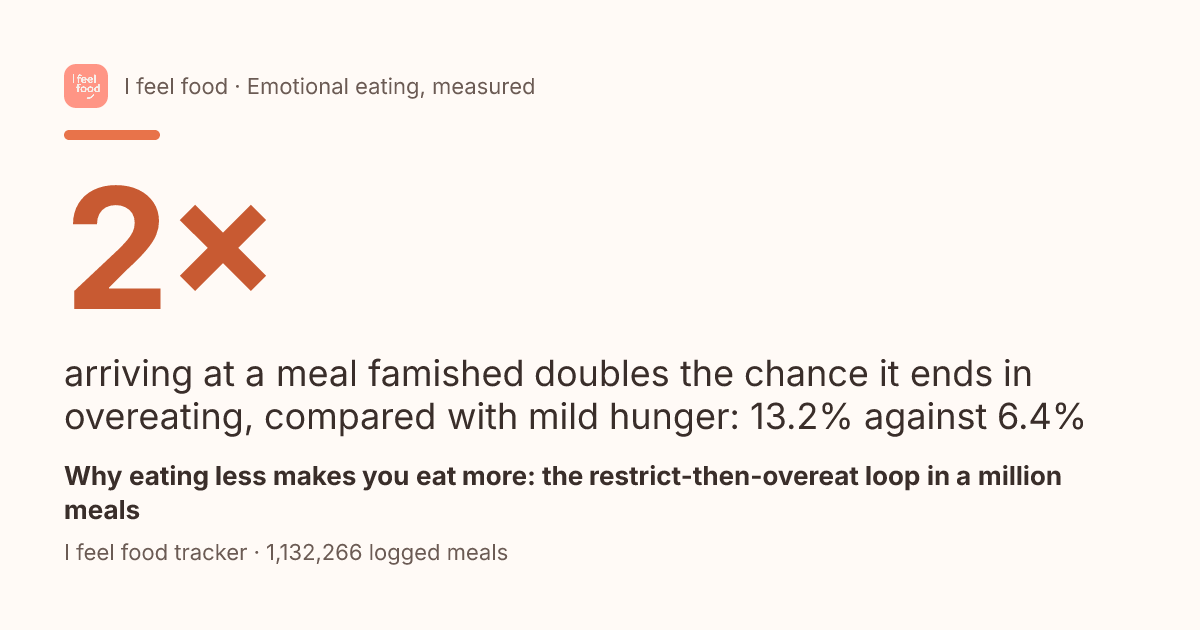
Why eating less makes you eat more: the restrict-then-overeat loop in a million meals
Restricting food then overeating: arriving famished doubles the overeating rate vs mild hunger, 13.2% vs 6.4%. The loop in a million meals, and the way out.
-
Part 10 of 10
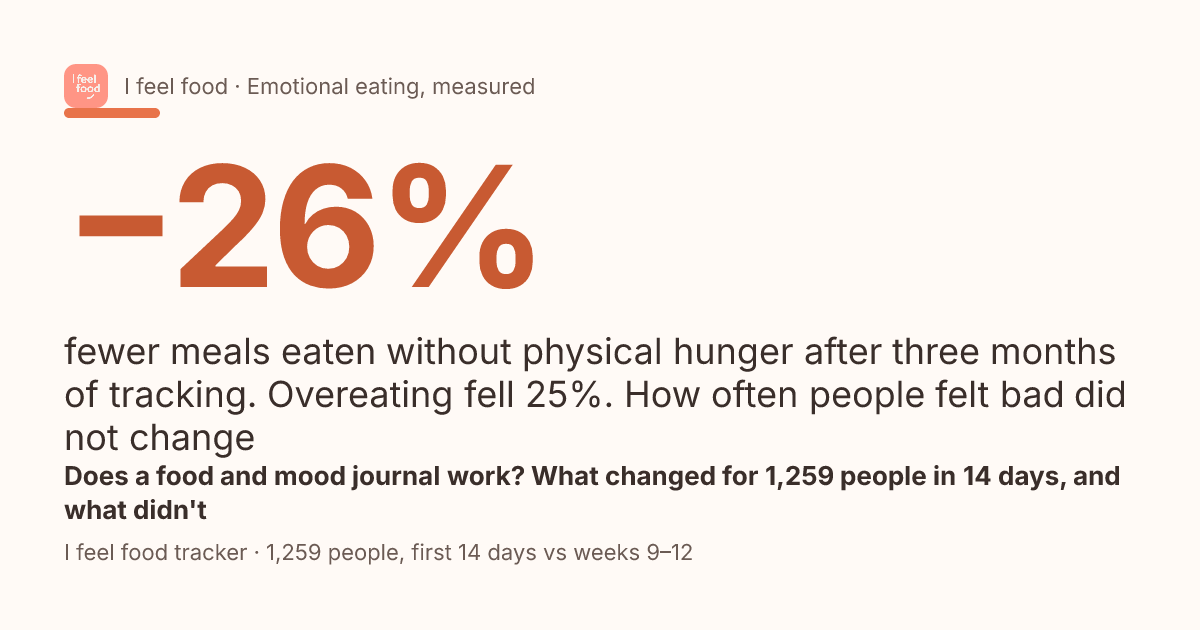
Does a food and mood journal work? What changed for 1,259 people in 14 days, and what didn't
Does food journaling work? 1,259 people tracked meals for three months: eating without hunger fell 26%, overeating 25%, how often they felt bad didn't change.
More from the blog
-
Emotional vs physical hunger: how to tell
How to tell emotional hunger from physical hunger: a five-second check built on a 0–9 hunger scale, with the signs of each and what to do with the answer.
-
How to stop boredom eating
How to stop boredom eating: spot the empty stretch before it becomes a snack, check your hunger in five seconds, and give your hands ten minutes first.
-
What is emotional eating? Signs and triggers
Emotional eating is eating to deal with a feeling when your body isn't hungry. The signs, the common triggers, and how to notice it before the first bite.