You eat to make a feeling stop. Stress, sadness, a long day. The question is simple: did it stop?
We checked. In 33,124 meals eaten while upset and not hungry, 72% ended with the person still upset. About half the time, it was the exact same feeling they had eaten to get rid of.
Most writing on this topic guesses: food gives a quick lift, then guilt. This article doesn't guess. It uses what people logged in the I feel food app right before and right after each meal. It's part of a series built on 1.5 million logged meals. → What 1.5 million logged meals show about emotional eating
How we checked
Every meal in the app is logged in two halves. Before eating, you set a hunger slider from 0 (empty) to 9 (very full) and pick what you feel from a list of 45 emotions. After eating, you do it again: how full you are now, and how you feel.
That gives something a survey can't. The same person, the same meal, measured twice, minutes apart. In 403,738 meals, people recorded their feelings on both sides.
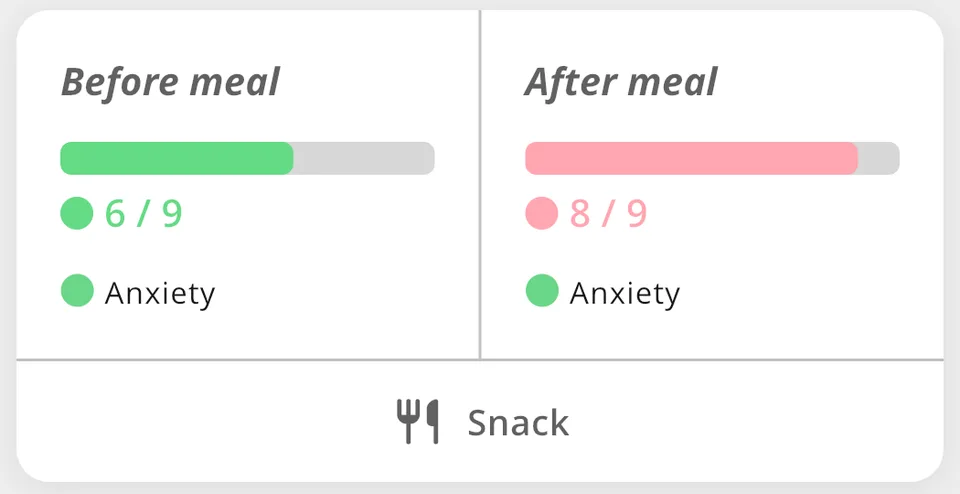
One logged snack, both halves. Anxious before, still anxious after. This is the pattern behind the main number below.
From those we pulled one group: meals that began with at least one uncomfortable feeling, while the hunger slider read neither hungry nor full or fuller. The body wasn't asking for food. That is emotional eating in its plainest form, and it happened 33,124 times.
Does emotional eating help? Mostly, no
In nearly three meals out of four, the bad feeling outlasted the food.
Show the numbers
| After the meal | Share of the 33,124 meals |
|---|---|
| still upset after eating | 72% |
| the same feeling still there | 49% |
| new guilt or shame on top | 16% |
The middle number is the one to sit with. Not a different bad feeling afterwards. The same one, named again by the same person who had just eaten to make it go away.
And some meals made things worse. One in six left a new feeling behind, guilt or shame, on top of the one that started it. One in five ended uncomfortably full. Guilt is its own trap, because it becomes the next reason to eat. → The guilt loop
Being upset isn't the problem
What decides how the meal ends isn't the mood. It's hunger. Compare people who were upset and genuinely hungry with people who were upset and not hungry.
Show the numbers
| How the meal started | Meals | Felt good after | Still distressed after | Ended uncomfortably full |
|---|---|---|---|---|
| Distressed, no physical hunger | 33,124 | 38.5% | 72.1% | 20.8% |
| Distressed, genuinely hungry | 117,391 | 52.1% | 63.2% | 8.7% |
| Calm or positive start | 179,016 | 88.3% | 14.3% | 5.9% |
Same kind of bad feeling going in. Very different meals. When the body actually wanted food, eating while upset mostly went fine: people often felt better, and rarely overate.
So eating while upset is not the thing to fix. Upset plus not hungry is the combination that goes wrong.
Why it feels like it works anyway
If food so rarely fixes the feeling, why does it feel like it does?
Partly because, for some feelings, it does, for a while. Boredom is the clearest case. After meals that started in boredom, only 29% of people still felt bored. Food gave them something to do, and for a few minutes that was enough. → Boredom is the number one trigger
That short relief is exactly what builds a habit. It doesn't have to last to be remembered. The next time the feeling shows up, the kitchen is the first idea you have.
So the problem isn't that eating never helps. It's that it helps just often enough to keep you trying, while most of the time the feeling stays.
What to do instead: a ten-second check
The answer isn't to resist. Holding off doesn't deal with the feeling either. What changes the outcome is knowing what you're about to eat for.
Before you eat because of a feeling:
-
Name the feeling. One word is enough: bored, anxious, lonely, tired. "I don't know" counts too.
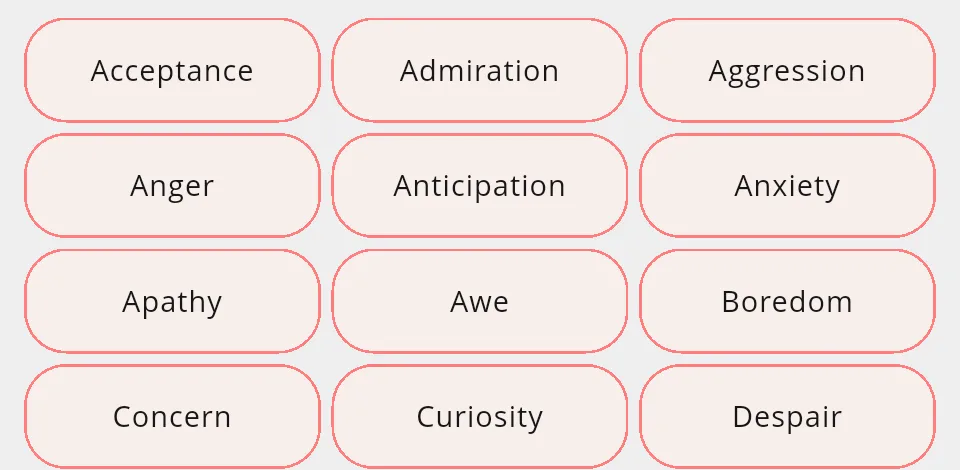
Part of the feelings list in the I feel food app: Acceptance, Anger, Anxiety, Boredom, Concern, Despair and more -
Read your hunger. Give it a number from 0 (empty) to 9 (very full). Under 3.5 ("Weak hunger" or stronger, in the app's words), your body is asking for food.
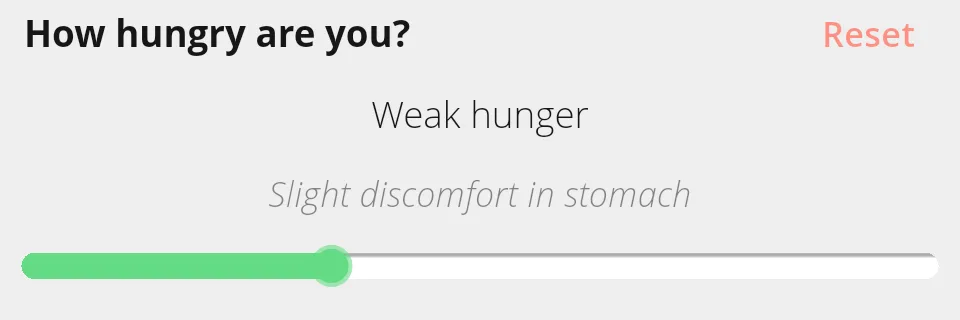
The hunger slider in the I feel food app set to Weak hunger: slight discomfort in stomach -
Then decide. Hungry? Eat, upset or not. That's the group that felt good afterwards half the time. Not hungry? You can still eat. You'll just know the food is for the feeling, and that the feeling will probably still be there after.
There's no rule against eating here. The check only moves the decision to before the first bite, where it actually gets made. → Physical hunger vs emotional hunger explains the hunger scale in full.
Tonight, the next time you reach for food because of a feeling, name it first. Then notice whether it's still there when you've finished.